Mesothelioma FAQ’s
Mesothelioma FAQ’s
Why Should Anyone Seek Justice as an Asbestos Victim?
The Wall Street Journal recently featured a fascinating story about an asbestos victim. Bill McQueen, unlike other mesothelioma patients that we often hear about, was not a shipbuilder or construction worker. He was an Air  Force surgeon. Dr. McQueen had sought medical care, when his chest pain persisted. He had thought it was perhaps a flareup of an old rib fracture. However, is doctor ultimately told him that he was suffering from mesothelioma, an incurable and fatal cancer that was encasing his left lung.
Dr. McQueen represents a different type of plaintiff in the asbestos litigation. Rather than targeting one or two defendants, asbestos claims are now involving dozens of corporate defendants. Research based on asbestos filing in Philadelphia reveals that almost 50% of the mesothelioma claims from 2006 through 2010 related plaintiffs’ exposure due to do-it-yourself type of construction or auto mechanic projects. In contrast, those type of plaintiffs were only about 3% of similar claims in the prior decade (1991- 2001).
The mesothelioma was so far advanced for Dr. McQueen, when his wife began to search for an asbestos-injury attorney. In 2011, waking up from a coma, Dr. McQueen found an attorney at his bedside. The process of understanding how Dr. McQueen was exposed to asbestos began with digging through photos of an old family farm. Some of those photos showed rusty paint cans, cement bags, and insulation, all of which Dr. McQueen had worked with decades before. As a result, Dr. McQueen and his wife named over two dozen corporate defendants.
What is also interesting to see from this WSJ article is the comments. Some found the McQueens’ search for justice “disgusting,” while others viewed the claim as a sort of fishing expedition. A scant few seemed to recognize that this was the family’s attempt to hold negligent companies accountable.
Dr. McQueen passed away in his home this past March. Trial is set for this November, while several defendants have settled with the family already.
L.A. Court Returns $26.6 Million Verdict to Former Drywaller
Last month, a Los Angeles Superior Court jury returned its verdict awarding $26.6 million to Michael Sutherland, a former drywaller, diagnosed with mesothelioma, a cancer caused by asbestos. and his wife Suszi.
As a drywaller in northern San Diego County from 1967, Mike was still attending Madison High School. Then, through 1993, he often took extended surfing trips to Hawaii and Mexico. As a contractor, he made a living for numerous residential and commercial jobs during the construction “boom” in the 1970s. During this period, cancer-causing asbestos was a common ingredient in popular construction products. Such products include joint compound, fire-rated drywall, caulk, stucco, roofing mastic and asbestos cement pipe.

“With all the trades working on top of each other trying to finish one job and move on to the next, it was always dusty,” Mike recalled, “It wasn’t until I became a lead maintenance mechanic at UC San Diego and attended a class on job safety in 2003 that I learned that so many of the materials used on the jobs back then contained asbestos.”
The Sutherlands’ case (LASC case # BC486980) was filed on June 20, 2012. Over 30 defendants were named in the case. They had settled most of the defendants before trial. However, Stucco manufacturer, Highland Stucco and Lime Products, Inc., refused to settle. Thus, Highland was the only defendant at trial, claiming that other companies and even Mr. Sutherland himself were responsible for his exposure to asbestos. Disagreeing with Highland, the jury ultimately found the company responsible for its role in subjecting Mr. Sutherland and other members of the public to its dangerous products.
Boeing Sidesteps Asbestos Claim
At a Boeing hammer shop, white powder was flaking and falling from overhead pipes. So maintenance workers re-wrapped the overhead pipes to contain the absestos insulation. These workers wore protective clothing that the hammer shop workers called “moon suits.” But those hammer shop workers, including Gary Walston, did not wear any protective clothing or respirators. While the moon suited workers wrapped the pipes, visible dust and debris fell on Gary Walston and his colleagues. To protect their tools from accumulating dust, they covered them with plastic. When Gary asked his supervisor if he could wear protective gear too, he was told “get back to work.”
Roughly 25 years later, Gary Walston was diagnosed with mesothelioma. He sued Boeing, his employer, alleging that he contracted mesothelioma as a result of his exposure to asbestos while working at the hammer shop. The trial court denied Boeing’s motion for summary judgment, and Boeing appealed.
Despite the fact Boeing’s previous involvement in workers’ compensation claims with claimants suffering from asbestos-related injuries, Boeing denied that it had any “actual knowledge” that Mr. Walston’s injuries would be “certain” as a result of the visible asbestos in the hammer shop.
Mr. Walston claimed that he presented evidence raising a material factual dispute about whether Boeing had (1) actual knowledge that he was certain to be injured and (2) that Boeing willfully disregarded such knowledge. Mr. Walston argued that he—like the employees in Birklid, Hope, and Baker—was injured as a result of being exposed to a substance at work that his employer knew was certain to injure him.
The three panel appellate court reversed the trial court’s denial of Boeing’s MSJ. Judge Marywave Van Deren wrote that Boeing workers like Mr. Walston “were not immediately or visibly injured by the exposure to asbestos.” “Nor did they complain of injuries caused from their exposure to asbestos. Walston was not diagnosed with an asbestos related disease until 25 years after the ‘moon suit incident’ in the hammer shop.”
What this ruling shows is that asbsestos injury lawyers have a steep hill to climb to educate judges and the larger public about the extreme hazards of asbestos exposure. Simply because someone is not immediately coughing or showing visible injury does not mean that their bodies have already been exposed to dangerous amounts of asbestos. Mesothelioma and other asbestos related injuries can take decades to detect, as illustrated by Gary Walston’s case. If you are ever in a situation such as Mr. Walston, please think about the longterm consequences and do everything you can to educate your employer. Keep a written journal and records of all written correspondence. Hopefully, however, you will not need these in a claim against your employer.
Superstorm Sandy Brings Asbestos Woes
The victims of Superstorm Sandy have seen enormous loss and devastation. Now, survivors need to recognize the risks of asbestos exposure.
The storm has claimed over 100 lives in the U.S.–mostly in New York, New Jersey and Pennsylvania. Over a hundred houses and housing units were destroyed, as witnessed by many news reporters throughout the New York/New Jersey area. We are talking about $62 billion and counting in damage and other losses in the country because of this latest storm.

Massive construction debris from Superstorm Sandy likely means thousands of tons of asbestos laden debris. (AP Photo)
To put Superstorm Sandy in perspective, Hurricane Katrina in 2005 left $128 billion damage in its wake, adjusted for inflation in 2012 dollars. In the Caribean, Sandy left no less than $315 million in damage.
A 2011 tornado in small town Joplin, Missouri left behind 2,600 tons of asbestos debris.
Contrast that one little community with all of the large communities, including the greater Manhattan area and the sizable New Jersey cities hit by Sandy. Linda Reinstein, president of the nonprofit Asbestos Disease Awareness Organization. “Do the math, and we can recognize that we have a significant public health risk with Hurricane Sandy.”
Along with schools and buildings, thousands of houses have water and wind damage, causing a spike in risks of exposure to various toxins. Asbestos related injury is one of the greatest concerns. Construction debris and waste likely contain microscopic asbestos fibers. Because these particles are virtually impossible to detect to the naked eye, people can unwittingly breathe it and ingest it. After time, mesothelioma or other severe medical conditions is a common result.
New Blood Test May Help ID Mesothelioma
Patients who believe that they may have mesothelioma may now have a new way of confirming their hunch via a blood test. US News & World Reports article earlier this month reported on the blood test, along with a lung fluid test. The lung fluid test looks for a protein in plasma called fibulin-3 that indicates whether a person has mesothelioma, often triggered by asbestos exposure.
The article quotes study author, Dr. Harvey Pass, a professor of thoracic oncology at NYU Langone Medical Center in New York City: “In the mesothelioma patients, fibulin-3 was four to five times higher than in asbestos-exposed individuals,”
Results of the study appear in the Oct. 11 issue of the New England Journal of Medicine.
This cancer originates in the lining of the heart, abdomen, chest, and lungs. Mesothelioma is a disease prevalent among individuals who have worked with asbestos or in locations where exposure to asbestos was likely. Smoking increases the risk of mesothelioma.
The deadly material has been used in manufacturing heat resistant materials, often used for construction/plumbing projects. Asbestos has also been used in automotive/truck parts–most notably the brake components, according to the U.S. Environmental Protection Agency.
Dr. Pass recognized that mesothelioma could take years, if not decades, to developer after asbestos exposure. Often, once diagnosed, mesothelioma patients would face grave prognoses of 1 year or less for survival. Symptoms are coughing, chest pain, and shortness of breath.
An earlier detection by use of a “biomarker” may allow for more effective treatment of mesothelioma.
Mesothelioma
 Malignant mesothelioma is a rare form of cancer caused by asbestos exposure. The cancer most commonly develops in the pleura, which is the outer lining of the lungs and the internal chest wall. The disease also may occur in the peritoneum, the lining of the abdominal cavity or other areas of the body.
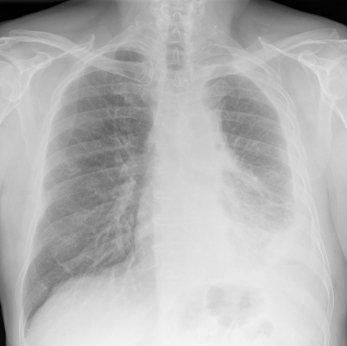
Shortness of breath, chest wall pain and weight loss are common symptoms of the disease. Although chest x-rays and CT scan can detect the disease, it must be confirmed by a biopsy.
Workers began to be commonly exposed to asbestos in the 1940s and continued to be exposed to the disease into the 1970s. These workers, simply trying to provide for their families were unaware of the dangers of their exposure. In many cases, workers brought the deadly fibers into their homes and unknowingly exposed their families.
Many ask “why are so many older workers being diagnosed with the disease?” The answer is that the symptoms of the disease generally do not appear in its victims until many years after exposure because it takes a very long time for the disease to develop in the human body. This is called a latency period. The latency for mesothelioma is usually decades. They is why those exposed so long ago are only now developing the disease.
The dangers of asbestos were not publicly known for many years, although records indicate that manufacturers knew long before the public. Those who exposed workers and their families to deadly asbestos fibers should be held accountable.
Are new treatments for mesothelioma being studied?
Are new treatments for mesothelioma being studied?
Yes. Because mesothelioma is very hard to control, the National Cancer Institute (NCI ) is sponsoring clinical trials (research studies with people) that are designed to find new treatments and better ways to use current treatments. Before any new treatment can be recommended for general use, doctors conduct clinical trials to find out whether the treatment is safe for patients and effective against the disease. Participation in clinical trials is an important treatment option for many patients with mesothelioma.
How common is mesothelioma?
Although reported incidence rates have increased in the past 20 years, mesothelioma is still a relatively rare cancer. About 2,000 new cases of mesothelioma are diagnosed in the United States each year. Mesothelioma occurs more often in men than in women and risk increases with age, but this disease can appear in either men or women at any age.
What is mesothelioma?
Mesothelioma (cancer of the mesothelium) is a disease in which cells of the mesothelium become abnormal and divide without control or order. They can invade and damage nearby tissues and organs. Cancer cells can also metastasize (spread) from their original site to other parts of the body. Most cases of mesothelioma begin in the pleura or peritoneum.
What are the symptoms of mesothelioma?
Symptoms of mesothelioma may not appear until 30 to 50 years after exposure to asbestos.
- Shortness of breath and pain in the chest due to an accumulation of fluid in the pleura are often symptoms of pleural mesothelioma.
- Symptoms of peritoneal mesothelioma include weight loss and abdominal pain and swelling due to a buildup of fluid in the abdomen.
- Other symptoms of peritoneal mesothelioma may include bowel obstruction, blood clotting abnormalities, anemia , and fever.
- If the cancer has spread beyond the mesothelium to other parts of the body, symptoms may include pain, trouble swallowing, or swelling of the neck or face.
These symptoms may be caused by mesothelioma or by other, less serious conditions. It is important to see a doctor about any of these symptoms. Only a doctor can make a diagnosis.